
Congratulations. Your Business Sounds Like Everyone Else’s.
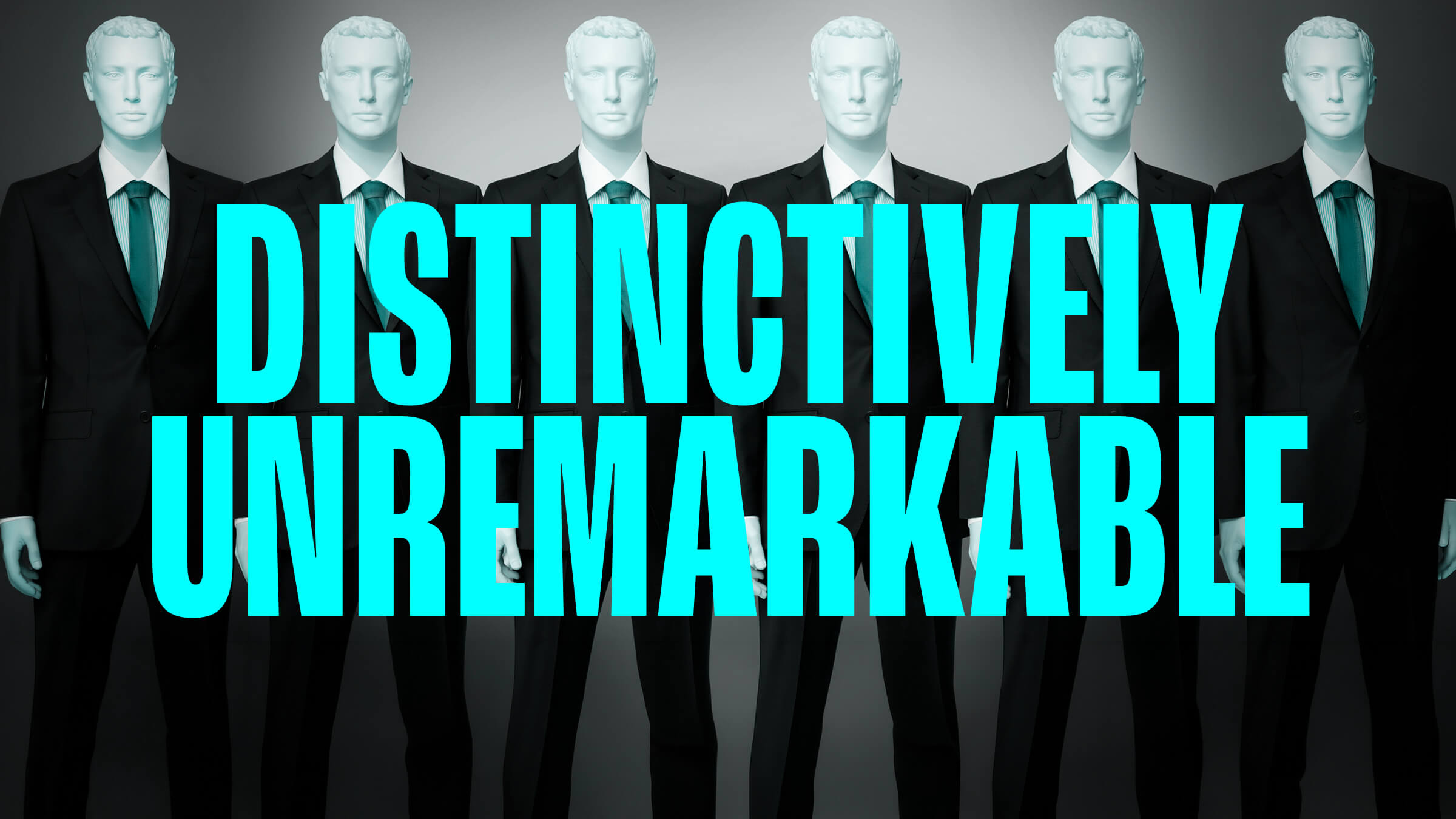
Your competitors think they’re different too.
Ask any business what makes them special and you’ll hear the same familiar answers. Experienced. Innovative. Reliable. Customer-focused. A team that goes the extra mile.
Lovely. I’m sure they are.
The problem is that your competitors will say exactly the same thing. Nobody is choosing a supplier because they used the word innovative three times on their website.
Most businesses don’t have a shortage of things to say about themselves. They have a problem deciding which of those things matter most, who they’re important to and why anyone should care.
And with AI making it easier to produce more content than ever, that problem is becoming harder to hide.
What do we mean by positioning?
Positioning is the deliberate choice of how you want your business to be understood in the market. It defines who you’re best placed to serve, the problem you solve and why someone should choose you over the alternatives.
It sounds straightforward, but it involves some difficult decisions. You have to understand what matters to your customers, what they’re comparing you against and where you have a genuine reason to be chosen.
Being experienced, reliable or customer-focused doesn’t give someone a reason to choose you. Those are expectations. They’re the minimum requirements for doing business.
Your positioning needs to go further than describing what you do. It needs to establish what you want to be known for and give the rest of the business a clear direction.
Your tagline, value proposition and messaging are expressions of that strategy. The strategic decision comes first. The words and visuals bring it to life.
Finding the idea that connects everyone
One of the hardest parts of positioning is deciding what matters most. Businesses are understandably reluctant to leave anything out. Every service has a customer, every team has a contribution to make and every audience feels important.
We faced a version of this challenge working with Leukaemia Care.
Leukaemia can affect anyone. A diagnosis affects the person living with the condition, but it also affects their family, friends and the people around them. The charity’s wider community includes volunteers, donors, corporate partners and the people working inside the organisation.
There were lots of passionate people with different perspectives on what the charity meant to them and what the brand needed to communicate. Everyone wanted to make sure their audience and contribution were represented.
Trying to give every perspective equal prominence would have created a complicated message with no obvious centre.
Through questionnaires and stakeholder interviews, we worked to understand those different views and identify the common purpose behind them. The strategic decision was to make Leukaemia Care the charity that supports the whole circle of people affected by leukaemia, including those living with it and those caring for or coping alongside them. Its role was to be there with practical help, information and emotional support throughout that experience.
We then developed the creative idea ‘It’s in our blood’.
A phrase with two meanings. There’s the literal connection to leukaemia and blood cancer, but it also speaks to the people involved and how deeply they care about the charity and its work.
The idea brings those meanings together without needing a different brand for every audience.
You can see this reflected in the messaging on the Leukaemia Care website. One line captures it particularly well:
When one person is diagnosed with a blood cancer, the whole family is diagnosed.
The same position can be communicated differently to people affected by leukaemia, donors and corporate partners. The audience changes. The purpose doesn’t.
This is relevant to commercial businesses too. Your customers, employees, suppliers and partners may all have different priorities, but they still need to understand what your business stands for. A manufacturer might sell to procurement directors, engineers and production managers. Each has a different reason to choose a supplier, but the business needs a clear position that connects its offer.
The answer isn’t always to narrow your audience. It’s to understand what connects them and decide what the business wants to be known for.
AI is making the problem more obvious
AI has made it much easier to produce marketing content. You can generate a website, write a sales presentation or create a month’s worth of social posts in a fraction of the time it used to.
But give it a vague description of your business and it’ll give you a polished version of what it already knows about every business like yours.
If your positioning is built around being experienced, innovative and customer-focused, AI can produce plenty of convincing ways to say it. Your competitors can do exactly the same.
The result is a lot of well-written content that says very little.
There’s nothing wrong with using AI to help create content. The problem starts when you expect it to decide what makes your business worth choosing. That decision needs an understanding of your customers, your commercial ambitions and the choices you’re prepared to make as a business.
AI can help express a position. The responsibility for deciding what your business stands for sits with the people running it.
Positioning needs to work inside the business
A positioning statement filed away in a brand guidelines document isn’t doing much for anyone.
Your sales team needs to understand why customers should choose you. Marketing needs to know what to communicate and what to leave out. Leadership needs to make decisions that support the position, from the services you develop to the customers you prioritise.
If those people have different ideas about what the business stands for, the inconsistency will find its way into the customer experience.
That’s why our Inside-Out Framework starts with strategy, before we even touch the audience facing assets.
The Leukaemia Care project followed the same sequence. We started by understanding the organisation and the people connected to it, established the strategic direction, then developed the language and creative idea. The identity gave the organisation a practical way to apply the strategy across its communications, from social media and advertising to events and fundraising.
The work needs to reach beyond the marketing department. Otherwise, you’ve invested in a brand that looks different but leaves the business operating and communicating in the same way.
Try this with your own team
Ask a few people from different parts of the business to answer this question independently.
If someone asked you why they should choose us over our competitors, what would you say?
Don’t give them a presentation or a list of approved messages first. You want to understand what people genuinely think.
Compare the answers. Are they describing the same reason to choose you, or are they talking about completely different things?
If the answers match, there’s another test. Could your competitors make exactly the same claim? If they could, you might have alignment, but you haven’t necessarily got strong positioning.
If the answers don’t match, you’ve got a bigger problem to solve before producing another website, campaign or sales deck.
Give people a reason to choose you
Your competitors aren’t sitting around trying to sound the same as you. They’re trying to communicate why they’re different, just as you are.
The trouble is that if nobody has made the difficult decisions about what the business stands for, you’ll all end up reaching for the same language.
If you’re unsure whether your brand gives people a clear reason to choose you, start with a Brand Clarity Assessment. We’ll assess how your brand is positioned and communicated, identify where the gaps are and show you what needs attention.
Your competitors will keep telling people they’re different. The question is whether anyone can tell the difference.